
Reviewed · OAHU SHARK TOURS
Oahu: Shark Cage Diving Experience
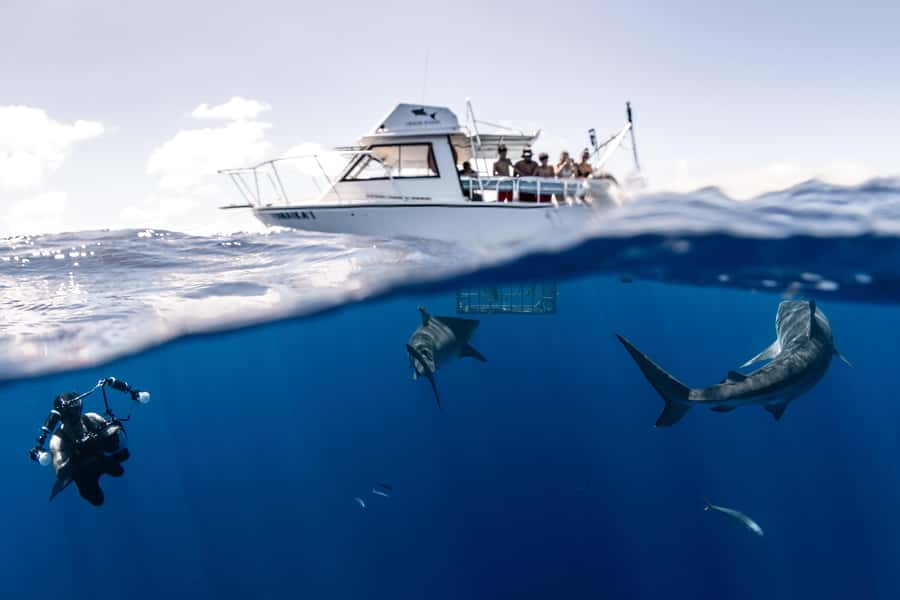
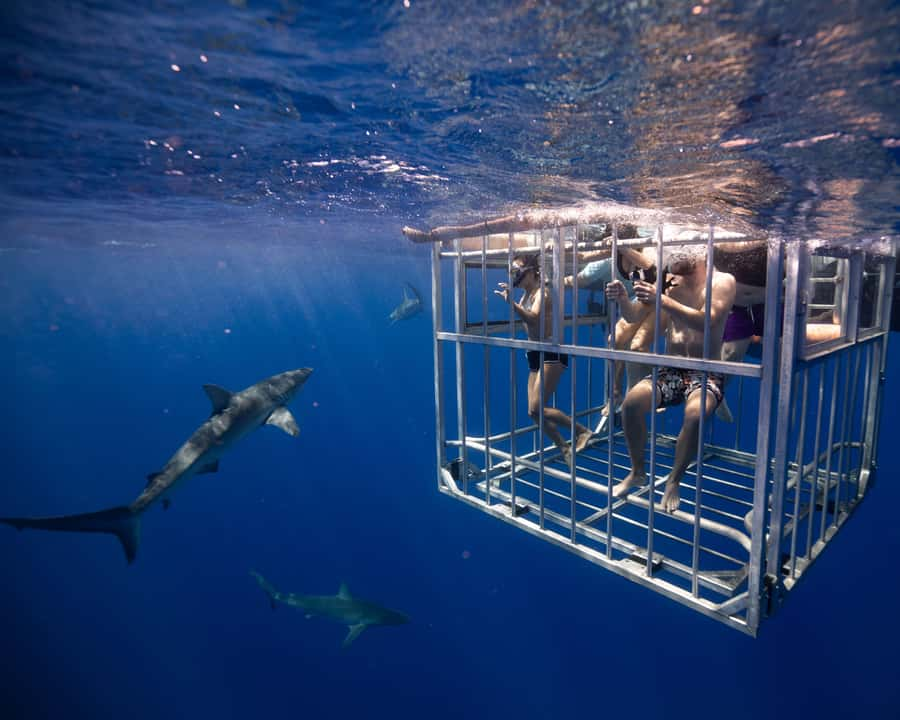
Off Oahu’s North Shore, the ocean turns into a classroom with sharks on the other side of the cage windows. I like two things about this two-hour experience: you can watch Galapagos and sandbar sharks without scuba gear, and the guide connects shark biology with their place in Hawaiian culture and mythology.
The catch is the open ocean. The boat travels about 3 miles offshore, where the swell can feel rough, and people prone to seasickness are not suited to this trip. Weather can also force a change of plans.
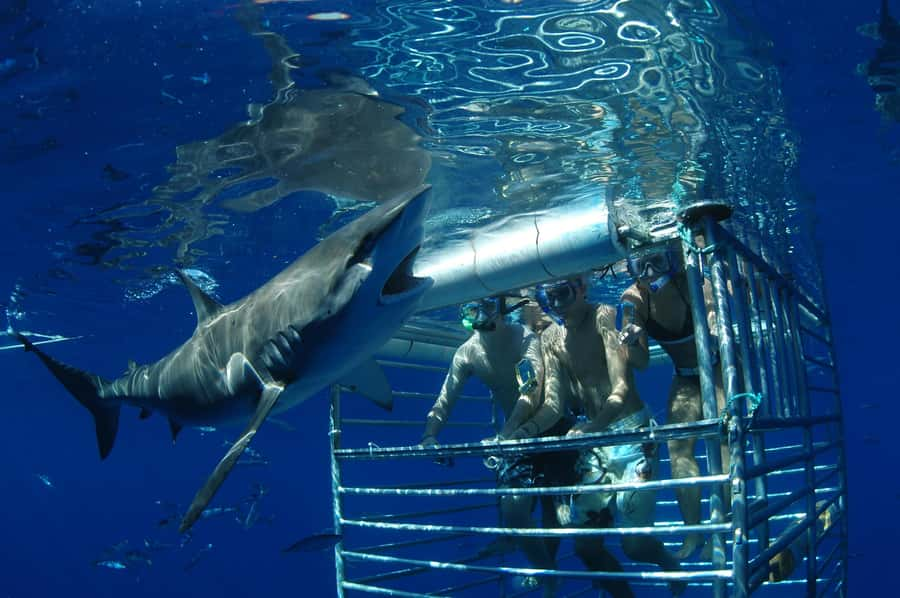
- Sharks at close range: Look through the cage’s large plexiglass windows as Galapagos and sandbar sharks pass nearby.
- No scuba required: You observe from the surface with a mask and snorkel.
- A local perspective: The crew covers shark behavior, Hawaiian culture, and conservation.
- A real offshore outing: The boat heads about 3 miles from shore, so expect open-water conditions.
- A conservation connection: The experience includes a contribution to shark conservation and an opportunity to participate in research.
- Haleiwa after the trip: The harbor is near shops and attractions in town.
From Haleiwa Harbor to open water
The trip begins at a harbor meeting point, which can vary depending on the option you book. Plan to check in 30 minutes before departure, and confirm the exact meeting location in your booking details rather than assuming every option uses the same spot.
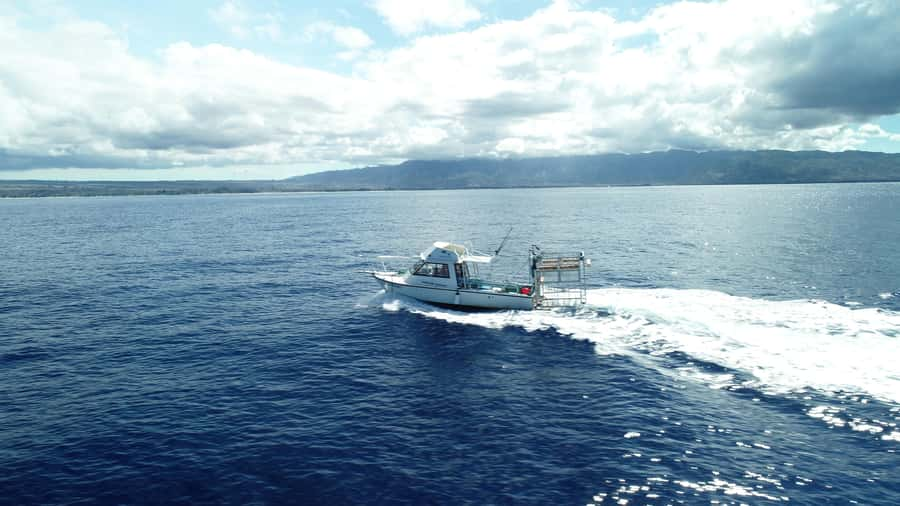
Once aboard, you head roughly 3 miles offshore. That short distance on a map marks a meaningful shift in conditions: you leave the shore behind and enter open ocean, where the boat may move with the swell. The ride is part of the outing, but it is also the main reason to take seasickness seriously.
The activity lasts about two hours in total. That time includes the boat journey, the safety briefing and shark education talk, and the cage encounter. The precise amount of time spent at each stage is not specified, so I would not plan around a guaranteed length of time in the water.
The crew is local and brings knowledge of the area. Their role is especially important here: they give the safety briefing, explain what you are seeing, and help you understand the setting beyond the spectacle of a shark at close range. Strong, attentive skippers and guides are a particular plus for this kind of trip.
Watching sharks through the cage windows
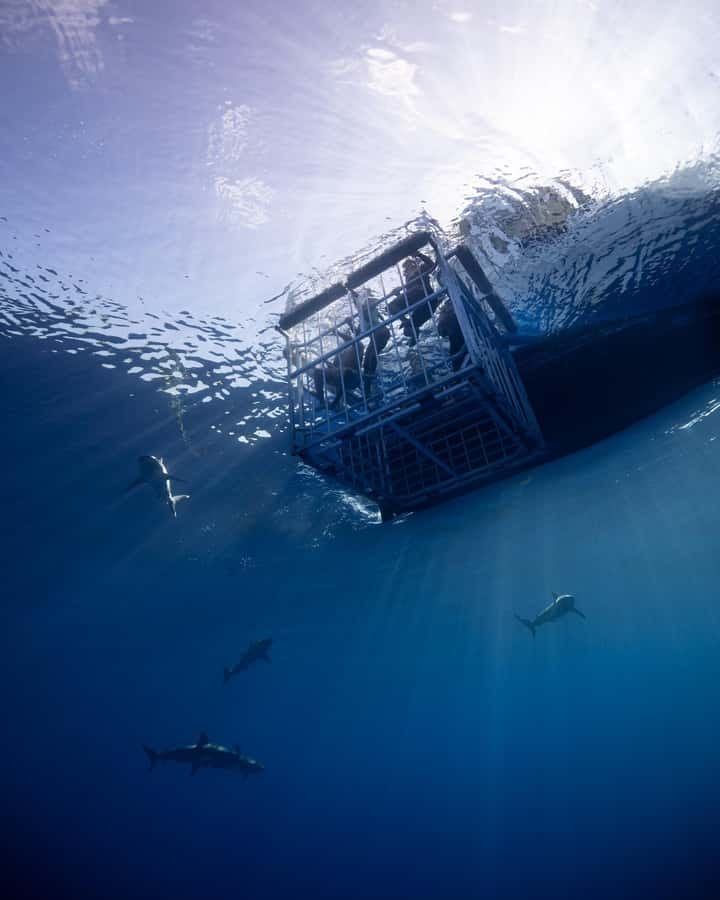
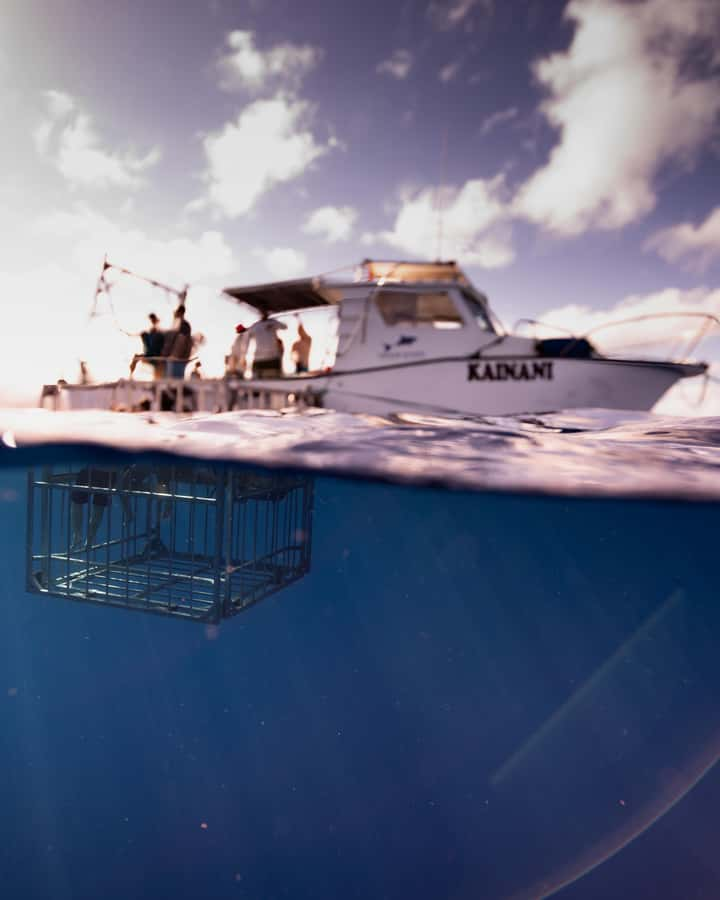
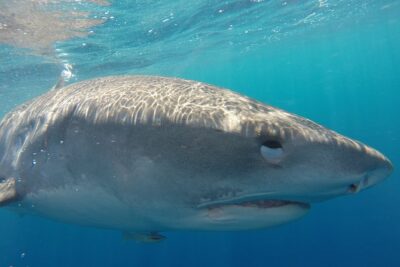
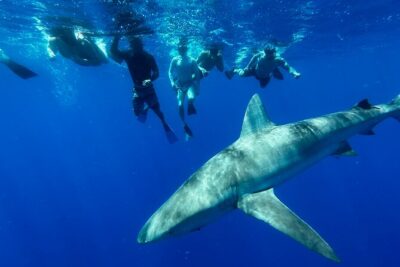
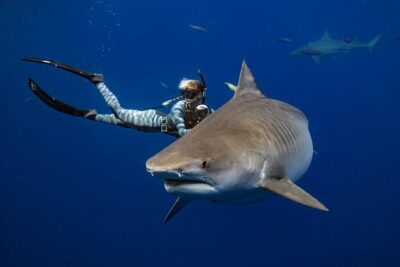
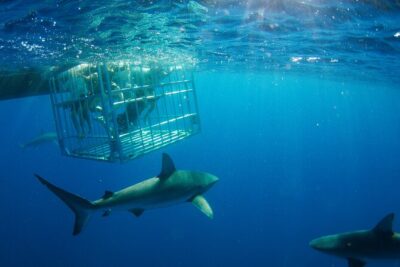
At the offshore site, you observe sharks from a floating cage, looking through large plexiglass windows. Galapagos and sandbar sharks are the species named for this experience. They may come close enough for a clear view, but they are wild animals, so their movements and distance are not something a tour can promise.
You stay at the surface with a mask and snorkel. This is not a scuba outing, and you do not need prior scuba experience. That makes the activity more accessible to people who want a close look at sharks without training for a deeper underwater excursion.
The cage creates a clear boundary between you and the animals while leaving you face to face with their natural habitat. Expect a different kind of encounter from watching a shark through aquarium glass: the view is out into the open sea, and the animals are moving freely. That immediacy is the point, but it also means conditions and sightings are not fully controllable.
A safety talk comes before the encounter. Listen closely, follow the crew’s instructions, and keep your hands to yourself. Touching marine life is not allowed, and there is no reason to reach toward a shark. The cage is for observation, not interaction.
More shark tours around Oahu:
- Oahu Shark Dive
★ 5.0 · 2,903 reviews - Oahu: Shark Cage Dive on the North Shore
★ 4.8 · 1,485 reviews - Shark Cage Diving on Oahu’s North Shore
★ 5.0 · 1,391 reviews
A shark lesson with Hawaiian context
The guide’s talk goes beyond identifying the animals. You’ll hear about shark biology and behavior, along with the role sharks hold in Hawaiian culture and mythology. The tour does not promise a lengthy cultural lecture, but it gives the encounter a local frame that a simple wildlife viewing trip might lack.
That context matters. Sharks are not just dramatic shapes in the water or a photo opportunity; they are animals with a place in marine ecosystems and in Hawaiian stories. You can come away with a better sense of why they merit respect, even if your first reaction is simply to watch them glide past the window.
The experience also covers ongoing shark research projects and conservation. There is an opportunity to participate in research, and the tour includes a contribution to shark conservation. The exact research activity is not specified, so treat participation as an opportunity rather than a guaranteed hands-on task.
I like that the conservation message is tied to an actual encounter. Seeing sharks at close range can replace vague fear with a more informed respect, and the guide has a chance to explain why their protection matters. It is a useful shift in perspective, though it should not be confused with a formal research course.
The open-ocean trade-off
The biggest practical question is how you handle boat motion. This is a trip several miles offshore, and the water can be rough. Some people find the swell manageable and worth it; others may feel unwell before reaching the cage.
If you are prone to seasickness, this is not a good choice. If you are unsure, consider your past experience on boats rather than relying on the short two-hour duration. The time on the water may feel longer when the sea is moving, and no close shark encounter can make nausea fun.
Weather is another variable. The activity is subject to weather conditions and may be rescheduled. That possibility is worth bearing in mind if you have a tight schedule or are arranging the trip near the end of your Oahu stay.
The ocean conditions also shape the encounter itself. This is a wildlife experience, not a staged show, and the tour cannot guarantee a particular shark’s behavior or how close it will come. The named species are Galapagos and sandbar sharks, but nature sets the pace.
What to bring and who should go
Bring swimwear, a towel, sunscreen, water, and a hat. A camera is also on the suggested packing list, but flash photography is not allowed. If you bring a camera, keep it secure and follow the crew’s direction about when and how to use it.
Snorkel equipment is included. Food and drinks are not, and hotel pickup and drop-off are not included either, so you’ll need to arrange your own transport to the meeting point and bring anything you want to eat or drink before or after the trip.
The activity is best for people who are comfortable in water and curious about marine life. You do not need scuba experience, but comfort in the water is required. The experience is not suitable for wheelchair users, people with back problems, or people prone to seasickness.
The age restrictions are described inconsistently across the available details, with several minimum ages listed. If you are booking for a child, check the specific option before paying rather than assuming a particular age cutoff. Weight limits also vary in the stated information, so confirm the limit that applies to your selected departure.
More dive trips around Oahu:
- First-Time Scuba Diving in Honolulu + Free Videos
★ 5.0 · 3,123 reviews - Beginner Scuba Diving Experience with Video Package in Honolulu
★ 5.0 · 877 reviews - Safe and Educational Shark Dive from Haleiwa: Sharks Guaranteed
★ 5.0 · 553 reviews - Dive with Sharks in Hawaii: Shark Tour from Haleiwa
★ 5.0 · 468 reviews
Is $97 a fair price?
At $97 per person, the price covers a two-hour shark cage experience, safety briefing, shark education talk, snorkel equipment, local crew, an opportunity to participate in research, and a contribution to conservation. That is a fair bundle if the main reason you are going is to see sharks in the open ocean and learn about them from a local guide.
The price does not include transport, food, or drinks. Factor in the cost and time of getting to the harbor, especially if you are staying elsewhere on Oahu. On the other hand, the harbor is close to Haleiwa town, so you can pair the outing with time among its shops and attractions without needing to make the shark trip an all-day commitment.
Value here depends on your appetite for uncertainty. You are paying for access to a wild setting and a guided experience, not a guaranteed number of shark sightings or calm seas. If that distinction sounds fair, the chance to see sharks from a protected cage and learn about conservation makes the cost easier to justify.
Make Haleiwa part of the day
The harbor’s proximity to Haleiwa gives you an easy way to continue your day on land. You could make time for shops and local attractions nearby, rather than heading straight back after the boat ride. The tour itself does not include a town visit, so allow extra time if you want to explore.
Keep your plans flexible, particularly if the ocean forecast is unsettled. A weather-related change can affect the activity, and the tour may be rescheduled. Booking with spare room in your schedule is sensible if this is a high-priority part of your Oahu plans.
Should you book this shark encounter?
Book it if you want a close, guided look at sharks, are comfortable in the water, and can handle the possibility of a choppy ride. The mix of wildlife viewing, shark education, Hawaiian cultural context, and conservation gives the trip more substance than a quick photo stop.
Skip it if you are prone to seasickness, need a fully predictable schedule, or would rather see marine life from dry land. For everyone else, the key decision is not whether the cage makes the encounter safe to observe, but whether you are willing to spend time offshore in changeable conditions. If you are, this is a memorable way to meet the North Shore’s marine life with a local crew.
FAQ
How long is the shark cage experience?
The activity lasts about two hours. Check the available starting times for your selected date.
Do I need scuba experience?
No. You observe from the surface using a mask and snorkel, and scuba experience is not required.
Which sharks might I see?
The experience features Galapagos and sandbar sharks. Their behavior and distance from the cage can vary.
What should I bring?
Bring a hat, swimwear, towel, camera, sunscreen, and water. Flash photography is not allowed.
Is the activity suitable for people prone to seasickness?
No. The boat travels about 3 miles offshore, and people prone to seasickness are listed as unsuitable for the activity.
Can weather affect the trip?
Yes. The activity depends on weather conditions and may be rescheduled if conditions require it.
Just added around Oahu
- Private Turtle Canyon Snorkel Tour – Up to 6 Passengers★ 4.5 · 29 reviews
- Private Off-Road Adventure Tour★ 4.5 · 52 reviews
- Private Off Road Explorer’s Tour★ 5.0 · 4 reviews
- Group Surf Lesson with Videos and Photos★ 5.0 · 69 reviews
- Private Surf Lesson for 3-5 People in North Shore Oahu★ 5.0 · 13 reviews
- Private Group Surf Lesson for 4 by Waikiki Beachboys at the Royal★ 4.5 · 19 reviews
- Private Deep Sea Full-Day Fishing Charter in Hawaiian Waters★ 4.0 · 5 reviews
- Private Group SUP Lessons by Waikiki Beachboys at the Royal★ 4.5 · 6 reviews
Oahu Shark Tours, compared.
Safe and Educational Shark Dive from Haleiwa: Sharks Guaranteed
Read our review →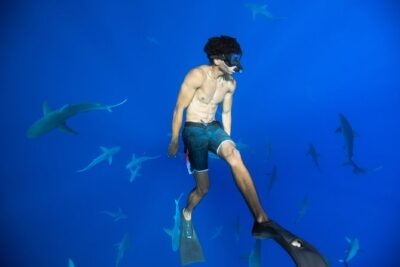
Dive with Sharks in Hawaii: Shark Tour from Haleiwa
Read our review →
Shark Cage Diving On “The World Famous North Shore of Oahu”, Hawaii
Read our review →Browse the lists this tour appears in