
Reviewed · TOURS IN HONOLULU
Bishop Museum General Admission Ticket
Bishop Museum brings Hawaiian history and Pacific cultures together in an ornate museum campus, with traditional objects, migration stories, astronomy and hands-on science under one ticket. For a visit that helps make sense of Hawaiʻi beyond its beaches, this is a strong place to start.
I like two things in particular: Hawaiian Hall’s cultural collections give you a close look at the islands’ traditions and leadership, while Pacific Hall sets those stories in the wider context of Pacific peoples and migration. The Science Adventure Center adds a welcome change of pace, especially if you are visiting with children.
The main caution is scale. There is much more here than you can absorb in a quick stop, and the planetarium show, parking and special exhibits cost extra. Allow at least a few hours, and check which spaces and programs are open before you set out.
What makes Bishop Museum worth your time
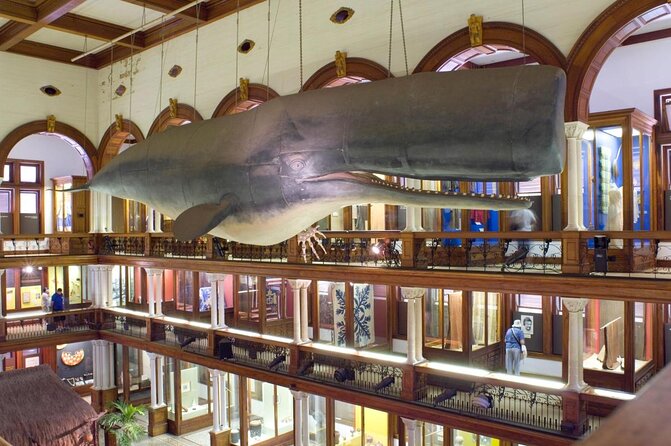
- Hawaiian Hall is the central stop for Hawaiian history and culture, presented in a striking building with detailed woodwork.
- Pacific Hall explores Pacific peoples, their values and traditions, and the migrations and settlement of the islands.
- The Jhamandas Watumull Planetarium focuses on the skies of Hawaiʻi and Polynesia, including the way ancient navigators used the stars. A show is optional and not included in general admission.
- The Richard T. Mamiya Science Adventure Center offers interactive exhibits about science and the Pacific environment, including how lava helped form the Hawaiian Islands.
- The Castle Memorial Building hosts temporary exhibits, so its contents can change and may not always be available.
- Plan several hours, not a rushed visit. One or two hours can give you a taste, but a half-day is a better fit if you like to read displays and explore each building.
Start in Hawaiian Hall, where the story is rooted
Founded in 1889, Bishop Museum was created to preserve and share Hawaiian and Pacific culture. That purpose still shapes the experience: this is not simply a collection of attractive artifacts, but a place to connect objects, traditions and history with the people who made and used them.
Begin with Hawaiian Hall. Its collections cover Hawaiian history and culture, with objects and displays that give you a sense of the islands’ traditions and past leaders. The building itself is part of the visit. Its ornate woodwork and grand interior are often as memorable as the exhibits, so take time to look up and around instead of hurrying from case to case.
The collection rewards a slower pace. A feathered kahili display, for instance, offers a striking look at an important object of Hawaiian tradition. Fishing hooks and woven mats show other forms of skill and daily life. These are useful details to linger over: they make culture tangible, rather than leaving it as a string of dates and names.
You do not need to arrive with a deep background in Hawaiian history to get something from the galleries. The displays provide context, and the range of objects gives you several ways into the story. If you already know the basics, take your time with the captions and smaller details. If not, focus on the exhibits that catch your eye and allow the broader picture to build as you move through the rooms.
A few more Oahu tours around Honolulu worth a look
- Pearl Harbor Aviation Museum Ticket with Audio Tour and Shuttle
★ 4.5 · 58 reviews - Honolulu: Bishop Museum General Admission Ticket
★ 4.7 · 20 reviews - Oahu: Pearl Harbor Aviation Museum Entry Ticket
★ 4.5 · 63 reviews
Pacific Hall connects Hawaiʻi to the wider ocean
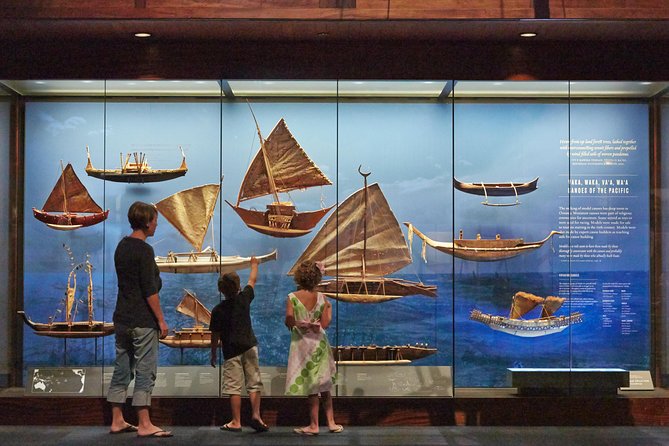
Pacific Hall expands the frame beyond Hawaiʻi. It explores the origins, cultures and values of Pacific peoples, as well as the migrations and settlement of the islands. That context matters: Hawaiian history is part of a much wider story of people moving across the Pacific and building distinct communities.
Look for the displays that trace migration and origins. A large map showing population movement can help you follow the geography and relationships among Pacific communities. For many visitors, it is one of the clearest ways to see how the islands fit into a larger human story.
The hall also includes objects such as fishing hooks and woven mats. These are worth more than a passing glance. Materials, shapes and patterns can show how people adapted their skills to island environments and carried traditions across generations. If you have limited time, I would give this hall a proper visit rather than treating it as a quick add-on after Hawaiian Hall.
The planetarium turns the Pacific sky into a navigation story
The Jhamandas Watumull Planetarium is designed to explore the skies of Hawaiʻi and Polynesia, including how ancient travelers navigated by the stars. It adds a different kind of learning to the museum: instead of seeing history mainly through objects and written displays, you can consider the sky as a guide across the ocean.
That subject gives the planetarium special value for visitors interested in navigation and Pacific voyaging. A program can also break up a long museum visit with a seated experience. But be clear about the ticket: general admission does not include a planetarium show. The show is optional and carries an extra fee.
Do not build your day around a particular program without checking that it is running. The planetarium has been unavailable at times, and closures can be disappointing if this is one of the main reasons you came. Check current opening and show information before your visit, then treat the planetarium as a bonus unless you have confirmed the schedule.
The Science Adventure Center makes the visit hands-on
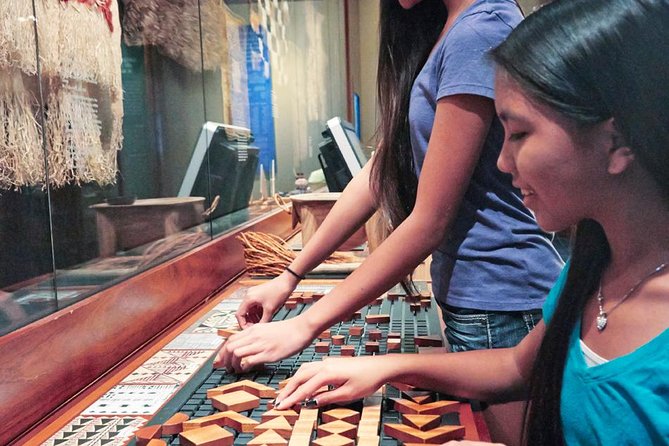
The Richard T. Mamiya Science Adventure Center focuses on science as it relates to Hawaiʻi and Pacific environments. Its interactive displays offer a useful change from reading exhibit panels, and the subject matter connects directly to the formation and natural history of the islands.
The center is a particularly good part of the visit for families. Children who might lose interest in traditional galleries may respond better to hands-on activities and science demonstrations. The live lava melting show is a central attraction, illustrating how lava and volcanic processes helped form the Hawaiian Islands.
One practical note: a live demonstration is not something to assume will happen at the exact moment you arrive. The lava show has not always been available, and the science building or parts of it can sometimes be closed. Check the day’s program and building status so you can plan around what is actually open.
Even without the demonstration, the science center provides a different way to understand Hawaiʻi. It links geology and environment with the islands’ cultural setting, rather than treating natural history as a separate topic. If you are short on time, this is still worth considering, especially if you are visiting with children or have a strong interest in volcanoes.
Same island, a different kind of day out:
- Oahu Grand Circle Island and Haleiwa Tour: 9-Hr Deluxe Experience
★ 5.0 · 17,387 reviews - Oahu: Grand Tour Around Island 16 Locations plus Snorkeling
★ 5.0 · 8,669 reviews - Salute to Pearl Harbor Including USS Arizona
★ 4.5 · 7,433 reviews - Majestic Circle Island Tour with Lunch
★ 5.0 · 7,014 reviews
Changing exhibits add variety, but check what is showing
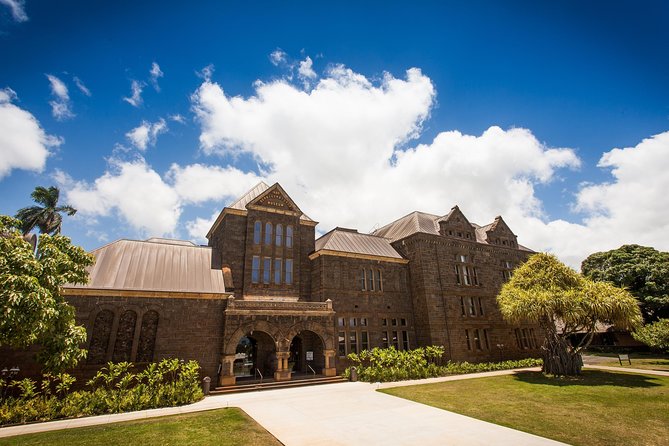
The Castle Memorial Building hosts changing exhibits. That can make a return visit worthwhile, since the content is not fixed, and it gives the museum space for new themes and displays.
The trade-off is that a temporary exhibition may not be open during your visit, or may not match your interests. Some parts of the museum campus have been closed at times, and that can affect how much you feel you received for the admission price. Before you go, check which buildings and exhibits are operating. If the temporary displays are central to your plans, confirm their status rather than assuming every space will be open.
Allow a half-day if you like to read and look closely
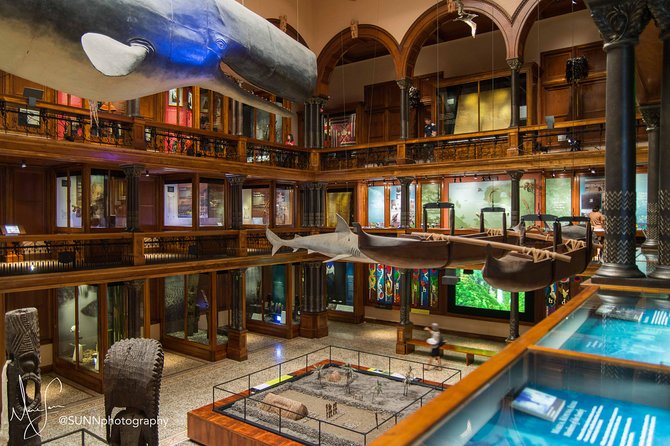
The museum estimates a visit can last from one to eight hours, but your pace makes the difference. A brisk two-hour visit can cover highlights, particularly if you focus on Hawaiian Hall and one other building. It is not enough to read every panel, see every exhibit and fit in a show.
I would set aside at least half a day if local history is a main reason for your visit. The campus includes several buildings, and the collection is substantial. People who stop to read the labels, study the artifacts and make time for the planetarium or science center can easily need longer. An eight-hour day is possible for a dedicated museum fan, but it is not necessary for everyone.
Arriving early gives you more room to explore and reduces the risk of reaching the end of the day just as you find another building you want to see. It also helps if you plan to eat on site: the restaurant may close before you are finished exploring. Keep an eye on closing time and meal options rather than assuming you can take a late break and return to the galleries.
The museum operates in all weather conditions, making it a useful indoor plan on a rainy day. Wear clothes suited to the weather, and expect to spend time moving between exhibit spaces. The museum is near public transportation. Parking is optional and may involve a separate fee.
Is $38.95 good value for general admission?
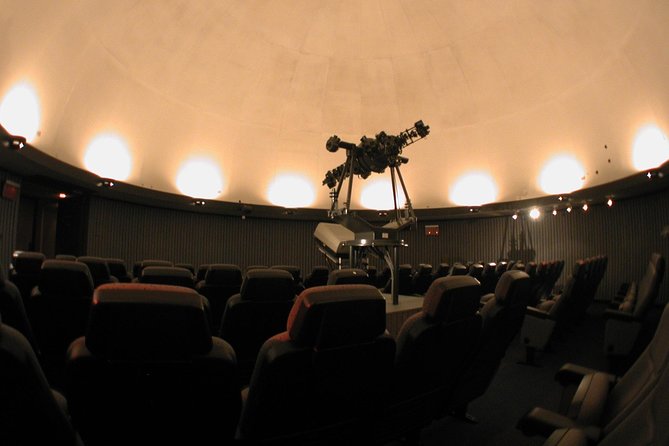
At $38.95 per person, the ticket is easiest to justify if you plan to spend several hours and are interested in Hawaiian or Pacific culture, science, or both. You are paying for access to a multi-building museum campus, not a short guided tour. The main cultural halls alone can hold the attention of history-minded visitors, while the science center adds a different experience for families.
The price feels less compelling if you have only a brief window, or if several spaces you hoped to visit are closed. General admission also does not cover the planetarium show or special exhibit fees, and parking may cost extra. Add those expenses to your budget if they matter to your plans.
The ticket is mobile, and confirmation is provided at booking. The experience is offered in English. The stated average booking lead time is 22 days, but that does not mean you must book that far ahead. It is a useful planning signal, especially if your schedule is tight. Before purchasing, compare the ticket details with the museum’s current information, particularly if price or a specific show is a deciding factor.
Who will get the most from this museum?
I would recommend Bishop Museum to anyone who wants more context for Hawaiʻi than a beach visit can offer. It works especially well for visitors interested in Hawaiian history, Polynesian culture, migration, traditional arts or the islands’ natural formation.
Families can make good use of the interactive science center, though the traditional galleries may feel slow for children who prefer activity to reading. Teenagers may appreciate being able to explore at their own pace. A museum-minded couple can spend hours among the collections, but even a shorter visit can be worthwhile if you choose a few priorities in advance.
It is less suited to someone looking for a quick, tightly scheduled attraction with every feature guaranteed to be open. There is no named guide included in the general admission details, and the visit is built around exploring the museum’s spaces independently. If you need a planetarium show or lava demonstration to make the ticket worthwhile, confirm the schedule first.
The booking terms allow free cancellation up to 24 hours before the experience. Changes or cancellations within 24 hours are not accepted for a refund. The experience information also says poor weather may lead to a different date or a full refund, although the museum itself operates in all weather conditions. Service animals are allowed, and visitors should have a moderate level of physical fitness.
Should you book Bishop Museum?
Book it if you want a substantial, thoughtful look at Hawaiian and Pacific cultures, and can give the campus several hours. Hawaiian Hall and Pacific Hall provide the strongest reason to come, while the planetarium and science center add worthwhile variety when they are open.
If you have only an hour or two, choose your priorities before you arrive. If the planetarium, lava demonstration or a temporary exhibit is essential, check availability first. With enough time and realistic expectations about optional costs, Bishop Museum is a practical way to connect the place you see on vacation with the people, traditions and natural forces that shaped it.
FAQ
How much does general admission cost?
The listed price is $38.95 per person. Parking, planetarium shows and special exhibit fees are not included.
How long should I plan to spend at Bishop Museum?
The visit is listed as lasting approximately one to eight hours. Allow a few hours for a selective visit, or at least half a day if you want time for several buildings and detailed displays.
Is a planetarium show included with admission?
No. A planetarium show is optional and costs extra.
Is the live lava demonstration included?
The Science Adventure Center features a live lava melting show, but the supplied admission details do not list a separate show fee. Demonstrations may not always be available, so check the current schedule.
Are special exhibits included in the ticket?
No. Special exhibit fees are optional and are not included in general admission.
Is parking included?
No. Parking is optional and may involve an additional fee.
What language is the experience offered in?
The experience is offered in English.
Is Bishop Museum suitable for children?
The Science Adventure Center has interactive learning activities that can suit children. The traditional galleries may be less engaging for children who do not enjoy reading exhibit displays.
Is the museum open in bad weather?
The museum operates in all weather conditions. The experience information also says that if poor weather causes a cancellation, you will be offered another date or a full refund.
Can I cancel for a refund?
You can cancel at least 24 hours before the experience start time for a full refund. Cancellations or changes made less than 24 hours before the start time are not accepted for a refund.
Just added around Honolulu
- Battleships of World War II Departing from Waikiki Area★ 5.0 · 10 reviews
- Private Half-Day Circle Island Highlights Tour in Oahu★ 4.5 · 10 reviews
- “The Dole Plantation” & “North Shore” Private Limousine VIP Tour!★ 5.0 · 6 reviews
- Private Bucket List Adventure Day- Hikes, Beaches, Waterfalls★ 5.0 · 48 reviews
- Half-Day Waterfall Tour – Hike, Scenic, Food and Photo★ 5.0 · 3 reviews
- Waikiki Sunset – 50 Min Helicopter Tour – Doors Off or On★ 5.0 · 8 reviews
- North Shore / Waimea, Falls Day & Swim with Turtles★ 5.0 · 106 reviews
- USS Arizona Memorial & The “Mighty MO” #1 Limousine Private Tour★ 5.0 · 5 reviews
Tours in Honolulu, compared.
Oahu Grand Circle Island and Haleiwa Tour: 9-Hr Deluxe Experience
Read our review →
Grand Tour Around Island 16 Locations plus Snorkeling
Read our review →

Oahu’s Ultimate Tour: Dole, Turtle Snorkel, Pali Lookout & More
Read our review →
Oahu Circle Island Tour with Turtle Snorkeling— Small-Groups
Read our review →
Browse the lists this tour appears in