
Reviewed · TOURS IN OAHU
The East Waikiki Walking Tour
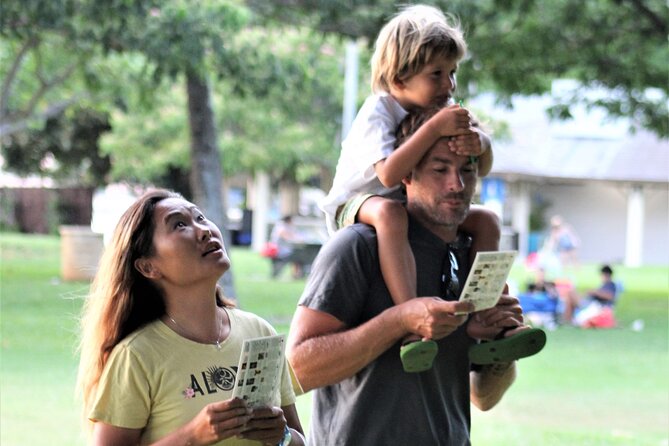
At Waikiki’s eastern edge, a walk can take you from an abandoned seaside war memorial to the foot of a volcanic cone, with surf history and a chance of spotting a Hawaiian monk seal along the way. This two-hour tour puts the familiar resort district in a wider frame: its geology, wildlife, and place in Hawaiian history.
I like two things in particular: the route links specific places to their stories, and the guide’s focus reaches beyond sightseeing to local issues and the effects of industry in Waikiki. The small group, capped at four, also leaves room for questions rather than a stream of commentary.
There is one practical caution: the available rating is 4.2 out of 5 from only five ratings, and one account describes arriving on time to find no guide. That is a serious reliability concern, so confirm the meeting details before you set out. The tour also calls for moderate fitness and depends on good weather.
- The Natatorium is a seaside war memorial with an Olympic-sized pool built in the water.
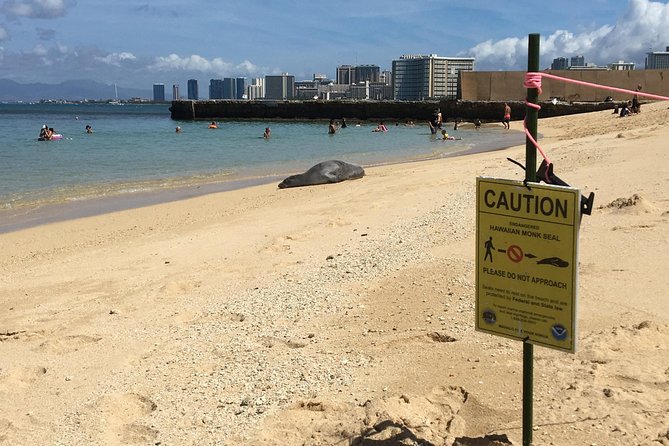
- Kaimana Beach brings together early surf-club history and a chance, not a promise, of seeing a Hawaiian monk seal.
- Kapiʻolani Park is the planned break stop, with locally made mochi ice cream included.
- The zoo perimeter provides stories about animals that have lived there, without a stated zoo admission.
- Diamond Head’s base is where the guide explains the island’s geological past and the formation of Leʻahi.
- The group is limited to four, with a 9 a.m. start and a roughly two-hour duration.
Waikiki’s eastern edge, beyond the hotel strip
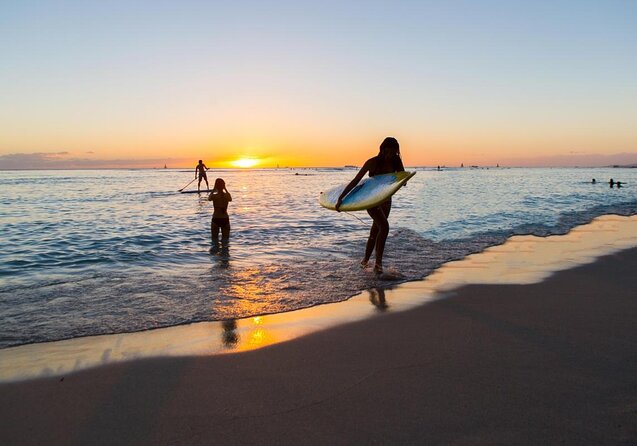
Hawaiʻi Walks frames this outing as a nature and history walk, not a quick tour of resort landmarks. Its guides have advanced degrees and expertise in Hawaiian flora, fauna, and history. The stated approach connects local places to geological and human history across the Pacific, while also raising present-day social issues and the effects of industry in Waikiki.
That wider lens is useful if you want more than a collection of dates and photo stops. The tour aims to help you understand what you are seeing and how tourism affects the islands, including how your choices as a visitor matter. It does not promise a particular political discussion or a set of recommendations, but sustainability is a central part of its stated approach.
The route is on foot and takes about two hours. It begins and ends at the public artwork Surfer on a Wave, at Kalākaua Avenue and Monsarrat Avenue. The start time is 9 a.m., a useful detail if you want to leave the rest of the day open. The group cap of four makes this a notably intimate format, though you should not assume that a small group guarantees a private tour.
The Natatorium: a memorial beside the sea
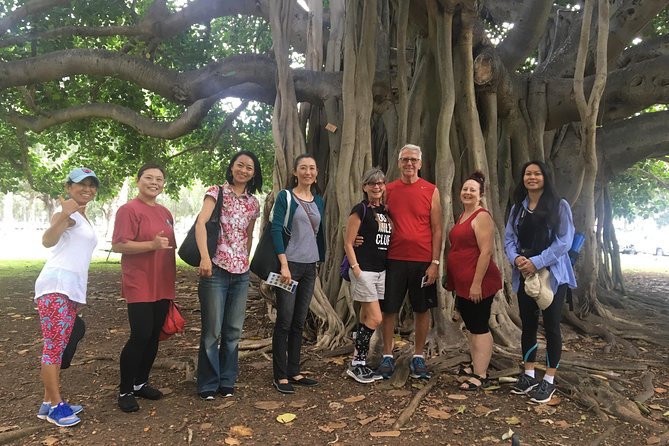
The first stop is the Waikiki War Memorial Natatorium, where the guide discusses Hawaiʻi’s history in the world wars. The memorial includes an Olympic-sized swimming pool built in the water and is described as abandoned. That combination makes the site more than a scenic backdrop: it prompts questions about commemoration, public space, and how a place changes over time.
You have about 15 minutes here, with no admission charge listed. That is enough for an introduction and a look at the structure, but not a long visit. The appeal is the contrast between the memorial’s formal purpose and its weathered, unused state, set right at the shoreline.
This is a strong opening for a tour that wants to place Waikiki in historical context. Rather than starting with resort development alone, the walk begins with a public monument and the island’s wartime past. If you are especially interested in military history, keep in mind that this is a short stop within a broader nature-and-history route, not a dedicated memorial tour.
A few more Oahu tours around Oahu worth a look
- Self guided Hike Trail to Nature Walk & Waterfall
★ 4.5 · 283 reviews - Honolulu Haunts: Ghosts and Spirits Walking Tour
★ 4.2 · 169 reviews - Honolulu Downtown Walking Tour
★ 5.0 · 149 reviews
Kaimana Beach: surf clubs and a possible monk seal
At Kaimana Beach, the subject shifts to surfing. The guide introduces the early surf schools established here and the rivalry between the Outrigger and Hui Nalu surf clubs. Their stories help explain how surfing and Hawaiʻi were presented to audiences abroad, making this a useful stop for anyone curious about the sport’s cultural history as well as its beachside image.
The planned visit lasts about 10 minutes, so expect a focused account rather than a long beach break. Kaimana is also noted as one of the favorite haul-out spots for the rare Native Hawaiian monk seal. A sighting is only a possibility, not something the tour can guarantee. The wildlife angle adds a welcome note of uncertainty: you can learn about the seals whether or not one appears.
This stop brings together two very different aspects of the coast. Surf clubs tell a human story about local identity and the image of Hawaiʻi; the monk seal represents the wildlife that still shares these popular shores. The short time here means the guide must keep both threads moving, but it gives the walk a distinct sense of place.
Kapiʻolani Park: a pause with mochi ice cream
The tour takes a 15-minute pause in Kapiʻolani Park for photos and locally made mochi ice cream. That snack is included in the $14 price, and it is scheduled about 45 minutes into the walk. It gives you a chance to sit back briefly, enjoy a local treat, and take in the park before the route continues.
A food stop may sound small, but it changes the rhythm of a walking tour. Instead of covering ground without a break, you get a planned pause and a taste of something made locally. The information does not specify the ice cream flavor or whether there are alternatives, so check with the operator if you have dietary needs.
The park stop is also a good point to take photos, as the tour explicitly allows time for that. Bring your own water: bottled water is not included. The company says it has sterilized hydroflasks with cold water for you to use if you forget yours, which is a useful backup, but bringing a refillable bottle is still the simplest plan.
Along the zoo: stories from its animal residents
The route circles the zoo and includes stories about some of the compelling animals that have called it home over the years. This is a look at the zoo’s perimeter, not a listed zoo visit. No admission is included or specified, so do not plan on entering the grounds as part of the tour.
The stop adds an animal-history thread to a walk that also covers geology and human events. Hawaiʻi Walks says its guides are experts in local flora and fauna, and the company’s wider approach includes detailed descriptions of animals and plants encountered along the way. The exact animals discussed are not specified, so the content may depend on the guide and what the route offers that morning.
If you are expecting a full wildlife outing, set your expectations accordingly. The listed focus here is stories about animals associated with the zoo, not a guaranteed close-up encounter or a visit to see specific species. Its value is in placing the zoo and its animal residents within the broader story of the area.
Same island, a different kind of day out:
- Oahu Grand Circle Island and Haleiwa Tour: 9-Hr Deluxe Experience
★ 5.0 · 17,387 reviews - Oahu: Grand Tour Around Island 16 Locations plus Snorkeling
★ 5.0 · 8,669 reviews - Parasailing Experience in Waikiki, HI
★ 5.0 · 7,692 reviews - Salute to Pearl Harbor Including USS Arizona
★ 4.5 · 7,433 reviews
Diamond Head’s base: a lesson in island geology
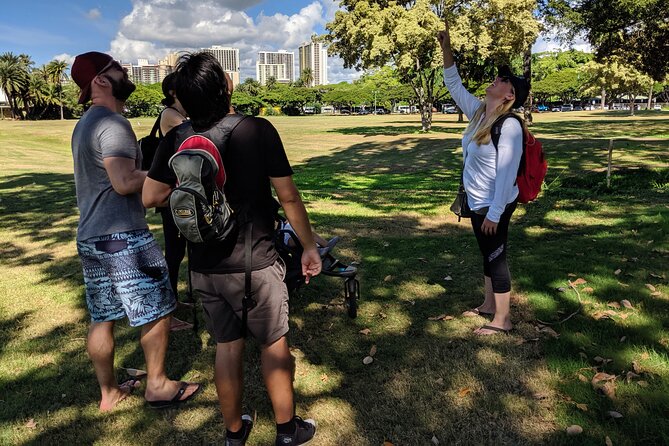
The walk follows the base of Diamond Head, or Leʻahi, State Park, where the guide explains the island’s geological history and how the iconic volcanic cone formed. It is a chance to look at one of Oʻahu’s best-known features with more than its familiar outline in mind.
This is not described as a hike to the summit. The route stays along the base, so book it for the walking route and geology discussion rather than for a climb or summit view. That distinction matters if you are trying to choose between this tour and a separate visit to Diamond Head.
The geological explanation also ties back to the tour’s larger purpose. Hawaiʻi’s scenery is not just a pretty setting; it has a physical history that shaped the islands. A guide who connects the cone to the wider formation of the island can give you a better sense of how the ground beneath Waikiki came to be.
What $14 buys, and what it does not
At $14 for about two hours, the price is modest for a guided walk with a maximum of four participants. The included mochi ice cream adds a small but concrete extra, while the main value is the guide’s attention and the route’s linked stories. You are paying for interpretation, not transport, admission to attractions, or a long list of included extras.
The tour is especially good value if you want context you might miss while moving between beaches and hotels on your own. The guide connects the war memorial, early surfing, park life, animal stories, and island geology, with sustainability and local social issues woven into the company’s approach. If you are mainly after a scenic walk or a guaranteed wildlife sighting, the value is less clear.
Bring water, comfortable walking shoes, and a level of fitness suited to a moderate walk. The available details do not give a route distance or describe the walking surface, so ask Hawaiʻi Walks if those details matter to you. Service animals are allowed, and the starting point is near public transportation.
A small-group outing with one reliability caveat

With only four places in the group, the format should feel more personal than a large coach tour, and there may be more room to ask questions. It also means availability can be limited. The 9 a.m. start and return to the same meeting point make planning straightforward, provided the tour goes ahead as scheduled.
Still, the reported no-show is worth taking seriously. One person said they arrived before the start time and the guide did not appear. That is a single account among a small total of ratings, so it does not establish a pattern, but it is enough reason to double-check your confirmation and make sure you have the operator’s contact details before leaving.
Weather is another consideration. The experience requires good weather; if poor weather cancels it, you are offered another date or a full refund. You can cancel for a full refund up to 24 hours before the start time. Cancellations or changes made within 24 hours are not accepted for a refund, so keep the local start time in mind.
Who should book the East Waikiki walk?
Book this if you want to understand the eastern side of Waikiki through history, nature, and local context, and you are happy to spend two hours walking between short stops. It suits curious visitors who prefer a guide’s explanations to simply passing familiar sights, especially those interested in surfing history, Hawaiian wildlife, and how tourism affects local places.
It is less suited to anyone seeking a strenuous hike, a full zoo visit, guaranteed monk seal viewing, or a long beach stay. The tour does not include bottled water, and its small number of ratings plus the reported no-show make confirmation worthwhile.
I would consider it at $14 if the route and the sustainability focus match your interests. Before booking, check the start details and your plans for water and weather. You will get the most from it if you arrive ready to listen, ask questions, and see Waikiki as more than a strip of hotels and sand.
FAQ
How long does the East Waikiki Walking Tour take?
It takes about two hours.
What time does the tour start?
The start time is 9 a.m.
Where does the tour begin?
It begins at the public artwork Surfer on a Wave, at Kalākaua Avenue and Monsarrat Avenue in Honolulu.
Where does the tour end?
It ends back at the meeting point.
How many people can join?
The maximum group size is four travelers.
Is mochi ice cream included?
Yes. Locally made mochi ice cream is included as a snack during the tour.
Is bottled water provided?
No. Bottled water is not provided, but sterilized hydroflasks with cold water are available if you forgot your own.
Does the tour include admission to the zoo?
No zoo admission is listed. The route circles the zoo and includes stories about animals that have lived there.
Is a monk seal sighting guaranteed?
No. Kaimana Beach is described as one of the seals’ favorite haul-out spots, but a sighting is not guaranteed.
What happens if bad weather cancels the tour?
If poor weather cancels the experience, you are offered a different date or a full refund.
Just added around Oahu
- Private Turtle Canyon Snorkel Tour – Up to 6 Passengers★ 4.5 · 29 reviews
- Private Off-Road Adventure Tour★ 4.5 · 52 reviews
- Private Off Road Explorer’s Tour★ 5.0 · 4 reviews
- Group Surf Lesson with Videos and Photos★ 5.0 · 69 reviews
- Private Surf Lesson for 3-5 People in North Shore Oahu★ 5.0 · 13 reviews
- Private Group Surf Lesson for 4 by Waikiki Beachboys at the Royal★ 4.5 · 19 reviews
- Private Deep Sea Full-Day Fishing Charter in Hawaiian Waters★ 4.0 · 5 reviews
- Private Group SUP Lessons by Waikiki Beachboys at the Royal★ 4.5 · 6 reviews
Tours in Oahu, compared.
Waikiki Trolley Hop-On Hop-Off Tour of Honolulu
Read our review →
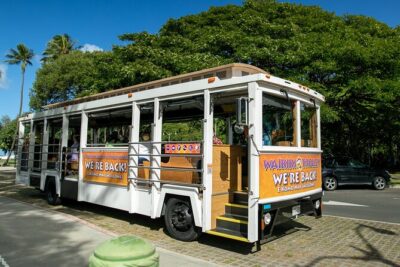
Waikiki Trolley Blue Line Coastline & Local Grindz Hop-on Hop-off
Read our review →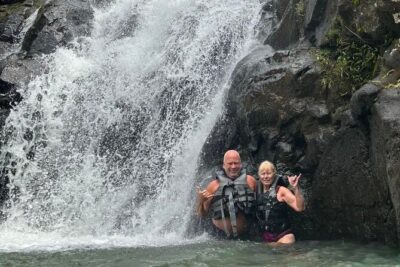
Oahu Circle Island Tour with Waimea Waterfall
Read our review →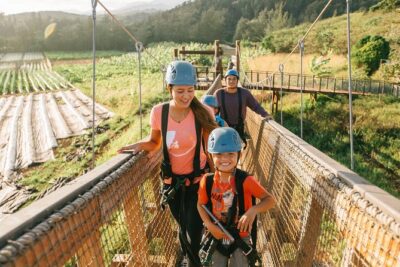
Oahu’s North Shore: 8-Line Zipline Adventure
Read our review →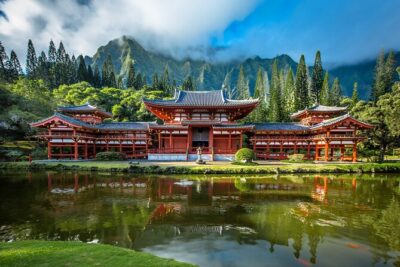
Hidden Gems of Oahu Circle Island Tour with Byodo In Temple
Read our review →Browse the lists this tour appears in